On October 29, 2026, Van Hien University successfully hosted a national scientific conference themed “Designing and Implementing Task-Based English Courses: From Needs Analysis to the Assessment of Learning Outcomes.” The conference served as an academic forum for experts and lecturers to exchange theoretical perspectives, share practical experiences, and propose solutions to improving the quality of English language education in higher education. It also aimed to strengthen the alignment between learners’ needs, curriculum objectives, and the practical demands of foreign language use.
As higher education increasingly prioritizes the development of practical competencies, English language teaching must go beyond equipping students with linguistic knowledge to provide them with opportunities to apply their language skills effectively in academic and professional contexts. In response to this demand, Task-Based Language Teaching (TBLT) has gained attention as an approach that structures learning activities around specific objectives and real-world communication tasks.
In her opening remarks, Assoc. Prof. Dr. Nguyen Thi Thu Trang, Vice President of Van Hien University, emphasized the importance of innovating English language teaching approaches to better meet practical needs. She highlighted that foreign language education should focus on learners’ ability to apply their knowledge in practice, while also calling for a shift in course design toward a more learner-centered approach.
One of the key topics at the conference was the role of needs analysis in course design. It serves as the foundation for defining learning objectives, establishing learning outcomes, selecting teaching materials, organizing classroom activities, and designing appropriate assessment methods. Through purposeful learning tasks, students can develop their communication, interaction, and problem-solving skills in English while enhancing their ability to apply the language effectively in authentic contexts.
The presentations and discussions focused on four major areas, highlighting key aspects of implementing TBLT across different fields of education.
In Business English, analyzing language needs in professional business environments forms the basis for developing relevant course content and learning tasks. Real-world scenarios such as negotiations, client communication, email writing, and presentations enable students to progressively develop English language competencies aligned with workplace requirements. In English language teacher education, learning tasks are designed to reflect authentic teaching practice. Students have opportunities to apply their knowledge through tasks such as lesson planning, exercise design, classroom management, and learning assessment. These experiences help them gradually build and strengthen their teaching competencies. In the field of translation and interpreting, discussions highlighted the importance of aligning learning outcomes, real-world tasks, and assessment criteria. Designing practical tasks tailored to the specific requirements of the profession provides a more accurate picture of learners’ performance while enabling lecturers to clarify expectations for each learning activity.
From a broader perspective, effective TBLT-oriented English course design requires close alignment among analyzing learners’ needs, defining learning objectives, developing learning outcomes, selecting course content, delivering instruction, and assessing learners’ results. This provides a foundation for ensuring that educational activities target specific competencies and meet the demands of English language use in academic and professional settings.
In addition to course design, learning assessment was another major topic of interest at the conference. Under the TBLT framework, language proficiency should be evaluated based on learners’ ability to use the language to complete tasks in specific contexts, rather than focusing solely on memorization or isolated tests. Clear assessment criteria help students understand expected outcomes, engage in self-assessment, and adjust their learning strategies accordingly. At the same time, task performance provides valuable information for lecturers, enabling them to offer constructive feedback, supplement learning materials, and adapt teaching activities to learners’ needs and abilities.
The conference also provided an opportunity for experts and lecturers to discuss the opportunities and challenges involved in implementing TBLT, ranging from task design and classroom management to the development of assessment tools and the enhancement of teaching staff’s professional competencies. These exchanges helped strengthen academic connections among higher education institutions and opened up further opportunities to apply TBLT across different educational contexts.
Let’s take a look back at some highlights from the conference:
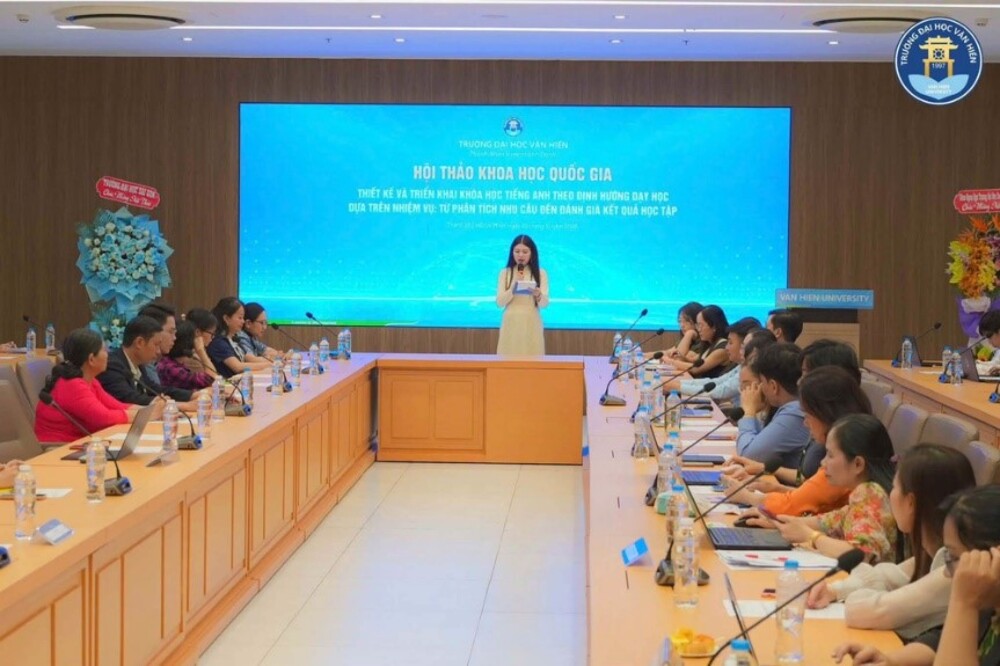
MC announcing the opening of the National Scientific Conference
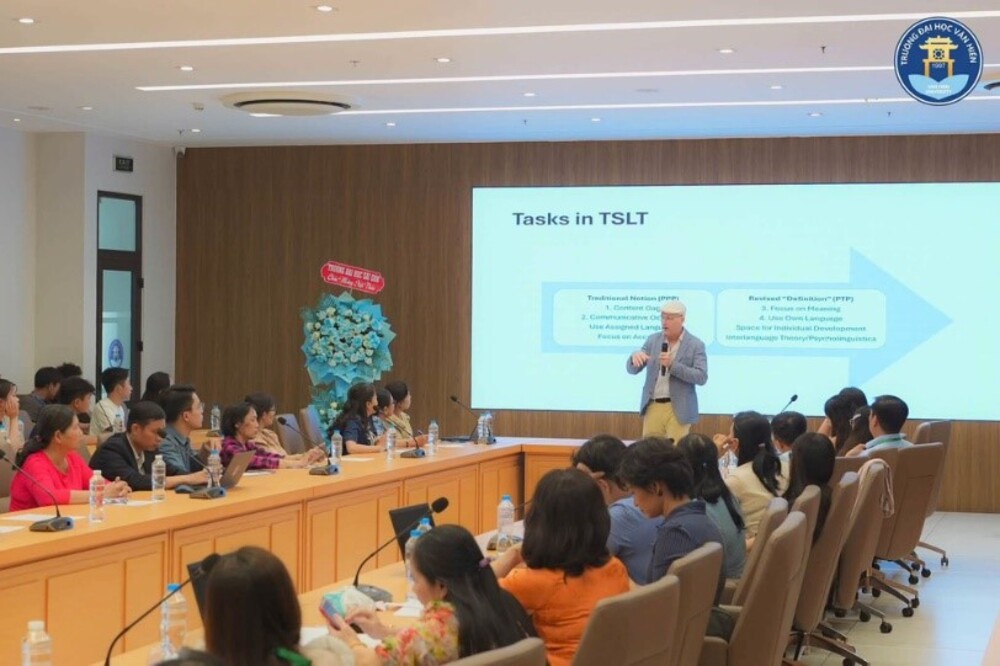
Professor Craig Lambert (Curtin University) delivering his presentation
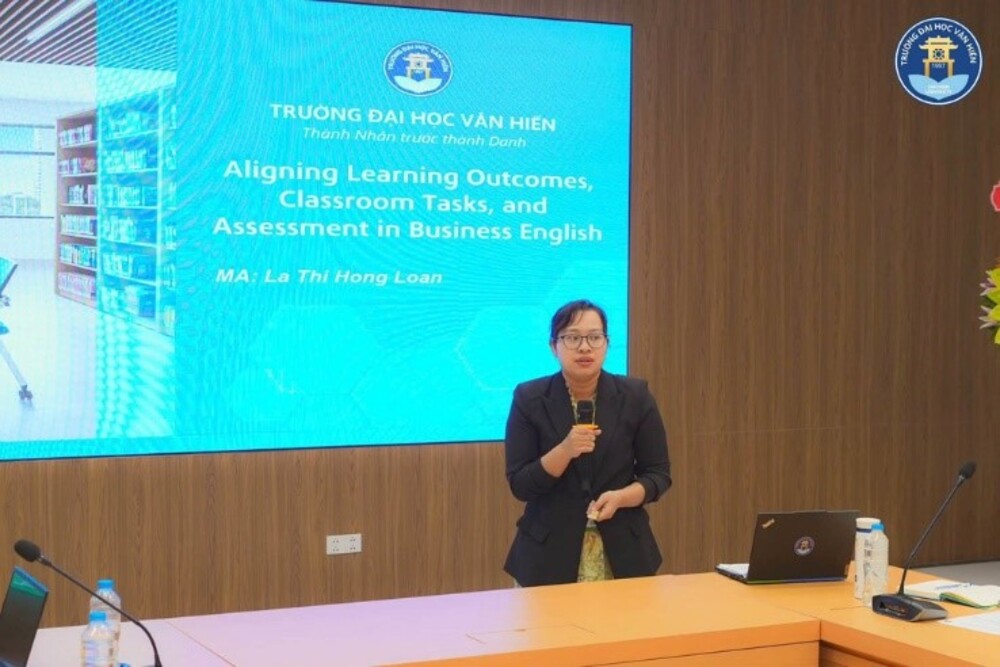
M.A. La Thi Hong Loan delivering her presentation
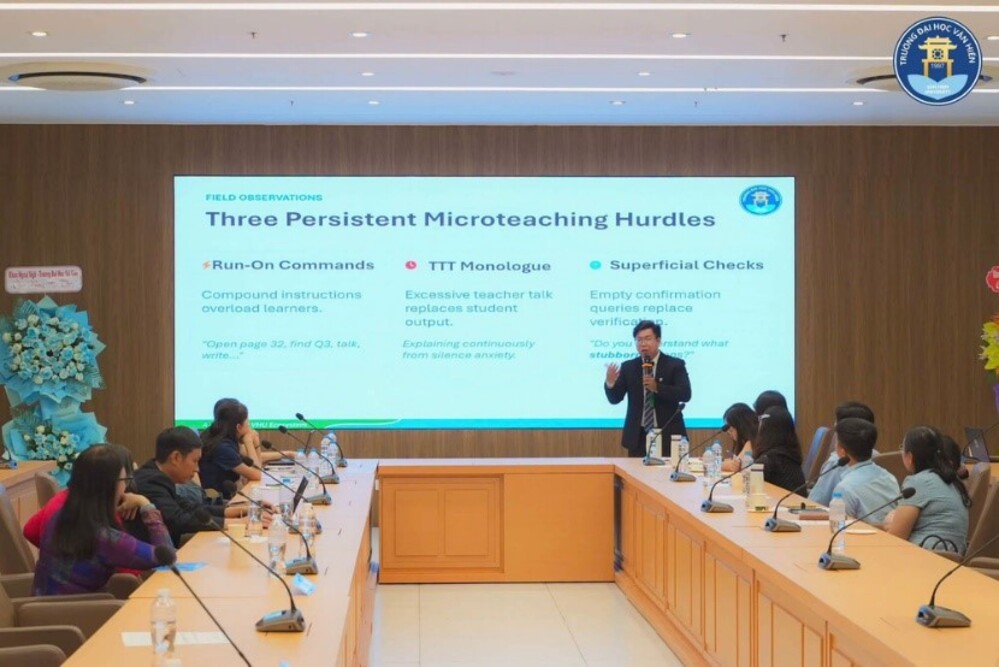
M.A. Nguyen Thanh Hai delivering his presentation
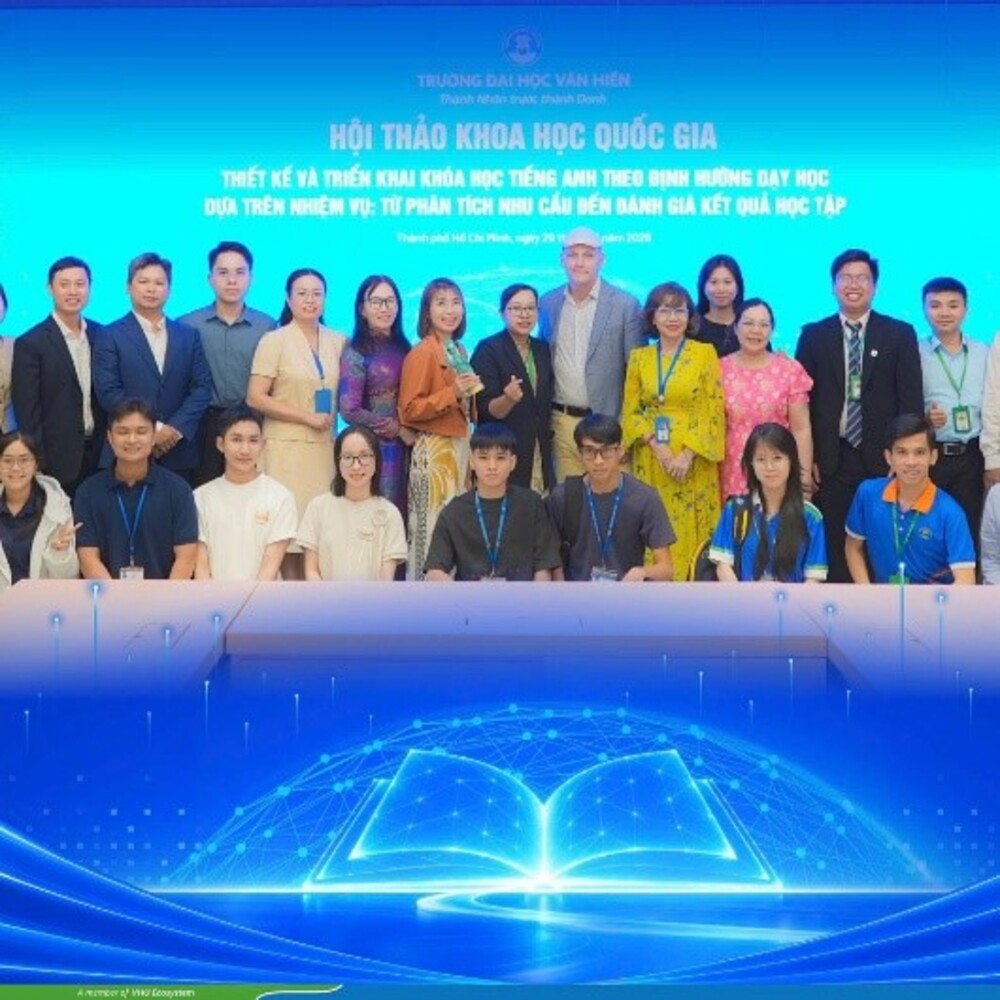
The conference ending with valuable insights and knowledge shared among participants
Through this National Scientific Conference, Van Hien University continues to reaffirm its commitment to promoting research, academic exchange, and innovation in foreign language teaching. The insights and experiences shared at the conference not only provide a valuable theoretical and practical foundation for designing and implementing task-based English courses but also contribute to improving educational quality, fostering well-rounded competencies, and enhancing students’ ability to apply foreign languages in an increasingly interconnected world.